

How Does Chiropractic Work?
July 31, 2026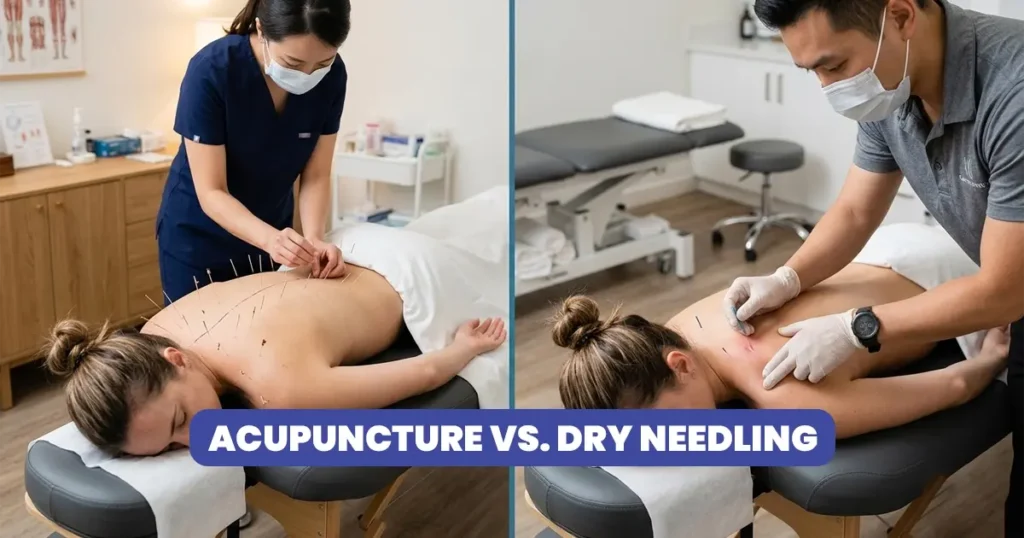
Apparently, acupuncture and dry needling look synonymous with each other because both practices use needles. At first glance, differentiating between the two approaches seems impossible, but knowing acupuncture vs dry needling in detail helps relieve chronic and acute pain. These methods are often part of the larger treatment plan, but they are widely misunderstood by many patients, who already have many questions.
If you are persistently experiencing muscle tightness, back pain, neck pain, or other musculoskeletal problems, acupuncture and dry needling can be possible treatment options. Instead of a one-size-fits-all protocol, this article differentiates between acupuncture and dry needling to provide an individualised approach for better treatment results.
What is the Difference Between Dry Needling and Acupuncture
Before you understand both techniques in depth, one thing is common. The thin needles are inserted into the affected parts of the body, but the similarities don’t go further. Let’s explore acupuncture vs dry needling for an informed decision.
What is Dry Needling?
Dry needling is a modern, less invasive method for pain relief and functional recovery. A report by the American Academy of Orthopedic Manual Therapists explains that dry needling is a science- and evidence-backed treatment that requires in-depth assessment of the neuromuscular system.
People often confuse both techniques and ask: Is dry needling the same as acupuncture? Licensed and expert physical and sports injury therapists perform this technique. The mechanics of dry needling are based on human anatomy and physiology. This method is widely acclaimed for treating sensitive and painful spots, known as Trigger Points.
Benefits of Dry Needling
- Dry needling is a perfect option for muscular stiffness and aches relief.
- It relaxes the trigger points, improves flexibility and mobility.
- Effective for sports injuries and even fibromyalgia aches.
- There are no as such serious risks or side effects associated with dry needling except minor bleeding, bruising and short-term soreness.
How Dry Needling Works
Different mechanisms work in combination with science-backed evidence to effectively use dry needling therapy. Let’s answer the question individuals ask: Is dry needling like acupuncture? The details help you understand every aspect here.
- Dry needling has different forms and various techniques. One of them is pistoning, or sparrow pecking. The in-and-out needle insertion doesn’t require needles to stay inserted in the targeted area of the skin for long. In this approach, the sterile needles prick the trigger points on the body and are then gently removed.
- Another one is the non-trigger point technique. Dry needling is also effective for a broader range. While treating pain around the central nervous system, expert practitioners prefer to insert needles in areas near the pain points instead of directly in the pain area. This is a logic driven method that believes pain is the result of a nerve or muscular issue.
What is Acupuncture?
Acupuncture is an old school of method that has been modernized. This focuses on reclaiming the energy flow and balance in the body. Physical energy flows through particular channels connected to certain organs. Inefficient or malfunctioning flow disrupts the body’s balance. This is where the role of acupuncture begins to remove the disruptions and blockages to restore the energy flow. People suffering from musculoskeletal issues can seek acupuncture, and its application is based on anatomy and physiology. This technique has a different system for applying needles because it is not limited to treating a stiff muscle or trigger point.
Benefits of Acupuncture
- Provides your body with the necessary healing energy and stimulants to release natural pain killers.
- Modern Western acupuncture involves targeted needle insertion to activate the nervous system.
- Researchers explain the effectiveness of acupuncture for pain relief in the back, neck, and knee.
- Acupuncture is found effective in controlling migraine symptoms while reducing the use of other medications.
- Improvement in labour pain experience, smoking cessation and depression related symptoms.
How Acupuncture Works
There are different techniques of applying needles in acupuncture to achieve the desired results. Let’s understand the mechanism for better understanding.
- Tiny, thin needles are placed uniquely into specific spots on the body to help balance Qi (life energy).
- This technique helps to stimulate the central nervous system, more precisely your nerves, muscles, and tissue, to release natural pain-relief chemicals.
- Microneedling improves blood flow. The combination of fresh blood and oxygen heals the inner tissues.
- The precise and strategic insertion of needles in the targeted spots stimulates the sensory nerves in the skin to relax muscles and reduce chronic pain.
What is Dry Needling vs Acupuncture | Key Differences?
If you are stuck between dry needling and acupuncture, these clear differences help you make an informed decision.
- Dry needling is rooted in Western medical science, focused on treating pain and reducing symptoms by influencing the body’s physiology. Acupuncture is a healing method focused on restoring and balancing the energy flow in the body.
- Dry needling has a limited scope of treatment, mainly treating the musculoskeletal system. Acupuncture has a broader treatment scope, encompassing all the problems related to internal organs and systems such as the kidneys and stomach, etc.
- Dry needling is a deeper technique where needles are inserted to access the underlying structures, such as tendons and muscles. Acupuncture is typically known as a shallower technique without affecting the underlying structures.
Which Approach Is Better? |Dry Needling or Acupuncture
Every individual has different conditions, symptoms and health goals. After understanding how dry needling is different from acupuncture, the next step is to choose the one. One particular treatment choice depends on several factors, including issue location and scope of the problem. If you have problems involving specific structures such as strains, injured tendons, and spasms, dry needling is the right choice for you. Acupuncture can also treat these problems, but better to harness its benefits for broader problems affecting multiple spots, such as digestive conditions and stress, etc.
Want to Get Expert Help?
Whether you are struggling with pain or a broader condition affecting larger areas of your body, fortunately, you have experts in Naperville. Let’s book your consultation with Wang Family Chiropractic for customized treatment plans and the wellness you deserve.